House Clearance Temple - Health & Safety Policy
Purpose: This policy sets out the health and safety commitments of
House Clearance Temple as a professional house clearance and rubbish removal provider. It outlines the approach taken to protect staff, contractors, customers and the public when delivering house clearance services, including domestic clearouts, estate clearances and rubbish collection operations.
Scope and Commitment
House Clearance Temple is committed to minimising risk across all activities carried out by the clearance company. This includes waste sorting, loading, transport, reuse and responsible disposal. The policy applies to all employees, agency staff and sub-contractors and covers operations within the service area where rubbish collection, bulky waste removal and clearance work are provided.

Principles and Legal Framework
While this policy does not replicate legal texts, the company recognises the need to comply with relevant health and safety regulations and environmental obligations. The organisation adopts established risk management principles: prevention, reduction of harm, safe systems of work and continuous improvement. All operations will be planned with safety controls proportionate to the hazards presented by rubbish clearance, including hazardous materials and sharps.
Risk Assessment and Safe Work Practices
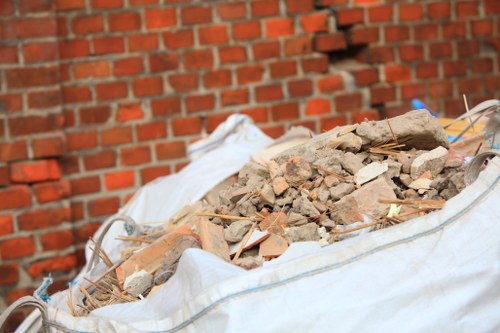
Risk assessments are completed before each clearance or bulky rubbish removal job. Assessments identify manual handling risks, exposure to hazardous substances, asbestos risk indicators, sharps and potential for slips, trips and falls.
House clearance service teams will implement control measures such as mechanical aids, lifting partners, signage and exclusion zones where necessary.
Work will not commence where risks cannot be adequately controlled.
Roles and Responsibilities
Responsibilities are allocated as follows:
- Management: ensure policy implementation, resourcing and review.
- Supervisors: conduct site assessments, brief teams and enforce safe working procedures.
- Operatives: follow instructions, use PPE and report hazards.
- Sub-contractors: meet the same standards as the in-house team and provide evidence of competence.
Everyone has a duty to stop work if they believe an activity is unsafe.
Training, Competence and Communication
The company provides regular training in manual handling, safe driving for rubbish collection vehicles, hazardous waste awareness and vehicle loading/unloading. Competence is verified through supervised on-the-job assessments. Safety briefings occur before each job and toolbox talks address seasonal issues or specific hazards for bulky clearance work. Communications include clear written method statements and on-site signage to support safe execution.
Personal Protective Equipment and Equipment Safety
Operatives are provided with appropriate personal protective equipment (PPE) including gloves, high-visibility clothing, safety boots, eye protection and respiratory protection when required. Equipment such as trolleys, harnesses and lifting straps is inspected and maintained to ensure it remains safe for use. Vehicle safety checks are completed daily to help prevent incidents during transport, loading or rubbish removal journeys.
Hazardous Materials and Waste Segregation
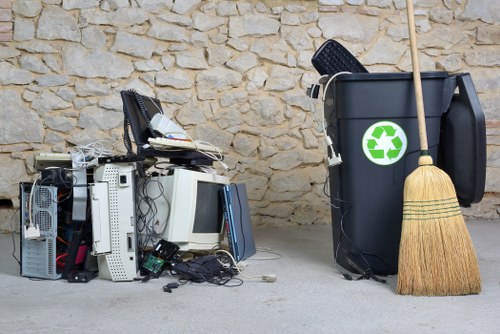
The company has strict procedures for identifying and segregating hazardous materials, including batteries, solvents, asbestos suspects, chemicals and contaminated items. These items are treated as high-risk and handled only by trained personnel following specialist removal procedures. Waste segregation is practiced on-site to maximise reuse and recycling and to ensure safe disposal of non-recyclable or hazardous materials in line with environmental best practice.
Incident Reporting, Emergency Response and First Aid
All incidents, near misses and property damage are reported promptly. A documented incident reporting system supports investigation, root cause analysis and corrective actions. First aid arrangements are in place for every job with trained first aiders and accessible first aid kits. Emergency procedures cover medical emergencies, fire and spill response, and contact with hazardous substances, ensuring rapid and organised reactions where required.
Monitoring, Auditing and Performance
The policy is monitored through regular inspections, safety audits and performance reviews. Key performance indicators include training completion rates, incident frequency, and compliance with vehicle checks and PPE usage. Findings from audits drive targeted improvements to reduce injuries and enhance operational safety for the rubbish company and its service area operations.
Contractor and Customer Interaction
When working at customer premises, teams will maintain professional conduct while ensuring safety controls are applied. Customers are briefed on potential hazards and the scope of clearance work. Where third parties or public access are present, the clearance team will implement barriers and warnings to prevent accidental entry into the work zone. The company aims to deliver a safe, respectful clearance experience while prioritising public and worker safety.
Review, Compliance and Continuous Improvement
This health and safety policy is reviewed at planned intervals and after significant incidents, changes to work practices, or regulatory developments. The organisation commits to continual improvement in health and safety performance, ensuring that the house clearance business maintains robust controls for rubbish disposal, waste collection and clearance activities.
House Clearance Temple expects all personnel to support and comply with this policy to protect health, safety and the environment.